By Prince Kapone | Weaponized Information | April 25, 2025
Pakistan’s Dirty Work for Empire Exposed
On April 24, 2025, RT News reported what revolutionary forces across the Global South have long understood: Pakistan’s military regime has once again volunteered itself as an imperial subcontractor, carrying out U.S.-directed counterinsurgency operations across the Middle East. Under Trump 2.0’s hyper-imperialist recalibration, Pakistan’s deep state is assisting in repression operations in Yemen, Iraq, and beyond — doing the “dirty work” that Washington prefers to keep at arm’s length.
But this betrayal did not begin in 2025. It is the latest chapter in a long, bloody history: Pakistan’s comprador military elite, propped up by U.S. finance and weapons, serving as a disposable pawn in the empire’s permanent wars against the peoples of the Global South.
From the CIA-ISI alliance in the Soviet-Afghan war that birthed Al-Qaeda, to the hiding of Osama bin Laden near a Pakistani military academy, to the U.S.-ordered coup against Imran Khan in 2023 — the Pakistani state has functioned less as a sovereign nation and more as an outsourced military-intelligence wing of imperialism.
Today, as China’s Belt and Road Initiative (BRI) expands, as BRICS+ grows stronger, and as anti-imperialist resistance multiplies, Washington’s desperation is visible. Trump 2.0’s technofascist regime seeks to forcibly discipline the world through economic strangulation, regime change, and subcontracted warfare. And Pakistan, battered by debt and internal contradictions, is once again being forced — and bribed — into the role of imperial mercenary.
This exposé will trace Pakistan’s betrayal, expose its deep roots in Cold War counterinsurgency, analyze the current re-mercenarization under Trump 2.0, and highlight the simmering revolutionary potential among the masses of Pakistan itself.
The future is not written.
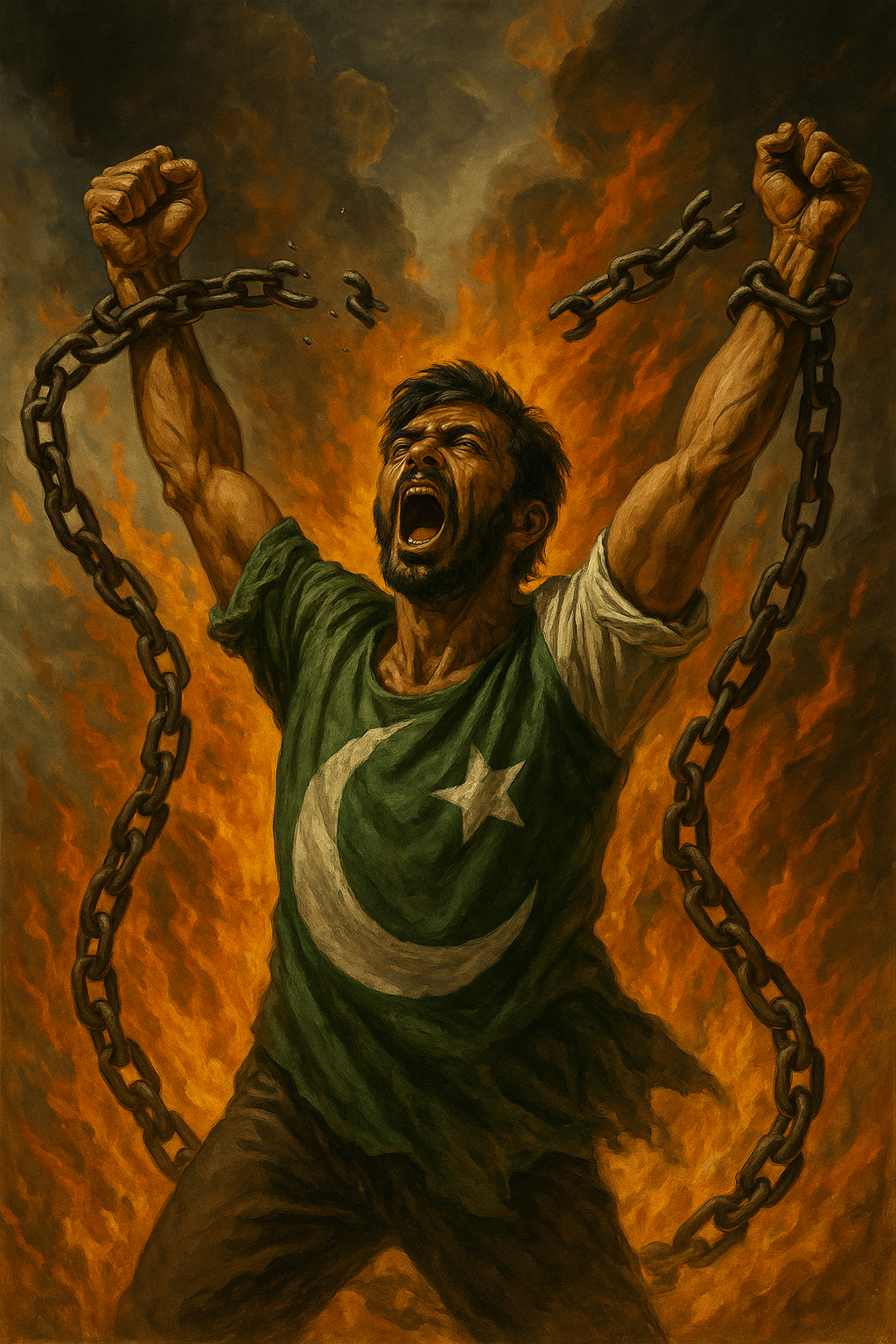
But if Pakistan is to break from its imperial chains, the truth must first be weaponized.
Historical Betrayal: The CIA, ISI, and the Imperial Deployment of Al-Qaeda
The roots of Pakistan’s betrayal run deep — entwined with the CIA’s long strategy of manufacturing proxy armies to wage dirty wars against socialist and independent forces across the Muslim world.
In 1979, as the Soviet Union intervened in Afghanistan, the United States did not simply “support Afghan resistance.” Through Operation Cyclone, the CIA — working hand in glove with Pakistan’s Inter-Services Intelligence (ISI) — created and operationalized a transnational jihadist army. [National Security Archive]
Billions of dollars in U.S. weapons, funding, and training were channeled into the region. But these resources were not randomly distributed. The ISI — operating as a subcontractor for the CIA — deliberately prioritized the most reactionary, fundamentalist forces to build a counterrevolutionary bloc capable of not only bleeding the Soviets, but also suppressing secular Arab nationalism, socialist movements, and any emergent multipolarity across the Middle East and South Asia.
Among the key assets developed during this period was a young Saudi courier and financier — Osama bin Laden. Under CIA and Saudi patronage, bin Laden helped funnel resources, ideology, and networks into what would later become known as Al-Qaeda. Far from operating independently, bin Laden’s activities were coordinated within the larger imperial architecture. His training camps, logistics networks, and financial channels were allowed — even encouraged — to flourish because they served broader U.S. strategic objectives.
Not Blowback — Battlefield Logistics
The liberal myth of “blowback” — that Al-Qaeda was an accidental consequence of Cold War short-sightedness — collapses under scrutiny. This was not an error. It was logistics.
The U.S. and its Saudi partners built an army of irregular forces designed to destabilize regions outside of Washington’s control. These forces were deployed not only against Soviet influence, but also against nationalist governments in the Middle East, secular resistance movements in Palestine, and later, emerging multipolar powers like China and Iran.
Even after 9/11, the CIA-ISI relationship was never dismantled. Billions continued flowing into Pakistan’s military apparatus, despite overwhelming evidence that the ISI sheltered, protected, and operationally managed Taliban and Al-Qaeda networks. [Congressional Research Service]
The imperial logic was simple: as long as these proxy forces served broader U.S. geopolitical interests — destabilizing enemies, justifying occupations, enabling counterinsurgency — they would be sustained.
Thus Pakistan’s deep state did not “fail” to control extremism. It functioned exactly as intended — as an outsourced logistics hub for imperial terror management.
Bin Laden, Black Ops, and the Empire’s Proxy State
The exposure of Osama bin Laden’s years-long safe haven in Abbottabad, Pakistan was not an intelligence failure. It was a revelation of the true structure of imperial logistics.
Bin Laden — the supposed arch-nemesis of the United States — lived comfortably less than a mile from the Pakistani Military Academy, under the nose of the ISI, a U.S.-funded and trained entity. His presence there was not a rogue anomaly. It was the logical result of decades of operational symbiosis between U.S. imperial intelligence and its Pakistani subcontractors.
Investigative journalists like Seymour Hersh (London Review of Books) and Carlotta Gall (New York Times) have provided damning evidence that Pakistani military intelligence not only knew of bin Laden’s whereabouts, but helped maintain the fiction of his “hiding” to sustain the political economy of the global War on Terror.
The U.S. didn’t mind. Bin Laden’s ghost — living or dead — was too valuable. He justified wars, drone strikes, occupations, mass surveillance, and a trillion-dollar counterinsurgency industrial complex.
Pakistan’s Role in Global Counterinsurgency Logistics
Following 9/11, the U.S. did not sever ties with the ISI despite its deep links to Taliban and Al-Qaeda networks. Instead, it expanded them. Pakistan became a central node in the empire’s counterinsurgency infrastructure:
- Hosting CIA drone bases for assassination campaigns across South Asia and the Middle East.
- Operating rendition facilities where kidnapped detainees were tortured off the books.
- Providing staging grounds for paramilitary raids, black ops, and logistics support for U.S. covert operations across multiple theaters.
All of this was funded by over $33 billion in direct U.S. military assistance between 2002 and 2018, despite the fact that Pakistan’s own territory became a blood-soaked battlefield for imperial management of “good” and “bad” terrorists. [Congressional Research Service]
The ISI wasn’t a rogue actor. It was a functional subcontractor of the technofascist empire — managing insurgencies, militias, and chaos on behalf of monopoly capital’s strategic objectives.
Bin Laden’s Safe House: An Imperial Monument
The Abbottabad compound wasn’t an oversight. It was a monument to the empire’s method: nurture the threat, manage the threat, exploit the threat.
Bin Laden, like the mujahideen before him and the “moderate rebels” of Syria after him, was not an accident of history. He was an asset — cultivated, deployed, sacrificed when necessary — to ensure that imperial extraction could proceed without serious challenge from sovereign, socialist, or multipolar forces.
And Pakistan’s generals — like obedient plantation overseers — played their assigned role.
Today, as Trump 2.0 reactivates these imperial blueprints across the Middle East, Pakistan is once again being repurposed: not as a sovereign nation, but as a disposable logistics hub for hyper-imperialist dirty wars.
The Road to Rebellion: Drone Wars, Multipolar Realignment, and Pakistan’s Defiance (2011–2021)
After the Abbottabad operation in 2011, where Osama bin Laden was eliminated in a theatrical raid, Western pundits declared the “War on Terror” in Pakistan over. But for the Pakistani people, the terror was just beginning — only now the bombs fell from American drones, and the real insurgency was against imperial domination itself.
Drone Wars and Civilian Radicalization
Between 2004 and 2018, the United States carried out over 430 drone strikes inside Pakistan’s tribal regions, killing between 2,515 and 4,026 people, including hundreds of civilians. [Bureau of Investigative Journalism]
Far from “surgical strikes,” these attacks indiscriminately targeted wedding parties, funerals, community meetings — producing mass rage among Pashtun, Baluchi, and working-class communities. Entire regions of Waziristan were turned into killing fields where buzzing drones haunted daily life.
Obama-era officials bragged about the “efficiency” of the program. But the ground truth was simple: imperial terror had replaced Islamic extremism as the primary source of violence in Pakistan’s periphery.
A 2012 study by Stanford and NYU Law Schools found that drones had terrorized entire populations, disrupted education and economic activity, and radicalized a new generation against both Islamabad’s military dictatorship and its imperial masters. [Living Under Drones Report]
It was in this cauldron of blood and betrayal that the seeds of mass anti-imperialist consciousness began to take root inside Pakistan.
The Rise of CPEC and Belt and Road Multipolar Integration
In 2015, Pakistan signed the China-Pakistan Economic Corridor (CPEC) agreement — a $62 billion infrastructure and energy development project linking western China to the Arabian Sea through Pakistan’s Gwadar port. [CPEC Official Website]
CPEC was more than an economic deal. It was a tectonic shift:
- It directly challenged U.S. logistical control over maritime trade routes.
- It bound Pakistan’s economic fate to China’s multipolar rise rather than to IMF dependency.
- It provided a physical manifestation of the Belt and Road Initiative’s strategic challenge to U.S. hegemonic control of Eurasia.
Washington immediately recognized the threat. Think tank reports from CSIS, Brookings, and RAND began labeling CPEC as a “strategic corridor” that endangered U.S. dominance. [CSIS Report on CPEC]
In private diplomatic cables, U.S. officials described Pakistan as slipping into China’s “sphere of influence” — an unforgivable crime in the eyes of an empire built on vassalage.
Economic Blackmail: IMF, FATF, and Financial Counterinsurgency
Facing the loss of Pakistan as an obedient client state, Washington weaponized its traditional instruments of economic domination.
- IMF Debt Traps: Pakistan was forced into harsh IMF loan agreements in 2019, agreeing to austerity measures that crippled working-class livelihoods, slashed subsidies, and opened public assets to privatization. [IMF 2019 Press Release]
- FATF Grey-Listing: The Financial Action Task Force (FATF), dominated by the U.S. and its European allies, placed Pakistan on its “grey list,” threatening access to international banking systems unless Islamabad curtailed “terror financing” — a flexible accusation used to target Chinese investments and political opposition forces alike. [FATF Grey List Notice]
These measures were not about fighting terrorism. They were economic siege warfare — designed to punish Pakistan for daring to pivot toward sovereignty and multipolarity.
The Defeat in Afghanistan and the Empire’s Need for Revenge
In August 2021, after two decades of occupation, the United States suffered a humiliating defeat in Afghanistan. The Taliban — long sustained through support networks inside Pakistan’s border regions — stormed back to power.
Western politicians and pundits immediately blamed Pakistan for the loss. In imperial propaganda, Islamabad had “betrayed” Washington by “harboring terrorists” and “undermining democracy” in Kabul.
The rage was palpable. Calls to sanction Pakistan intensified. Threats of diplomatic isolation were issued. Pressure mounted within U.S. policy circles to “discipline” Pakistan — to force it back into the fold or punish it as an example.
It was within this context of imperial humiliation that the stage was set for direct regime change: the removal of any Pakistani leadership that refused to return to the imperial plantation.
Standing at the Crossroads
By 2021, Pakistan stood at a historic crossroads:
- Scarred by imperial drone terror.
- Economically shackled by IMF and FATF blackmail.
- Strategically aligned with China’s Belt and Road and Russia’s multipolar resurgence.
- Targeted for destabilization by an empire in crisis after its Afghan defeat.
The imperial playbook was clear: crush Pakistan’s pivot to sovereignty before it could fully consolidate.
The empire’s agents inside Pakistan — the comprador generals, the political opportunists, the elite media — were mobilized for the task.
The Imran Khan coup in 2022 would not come out of nowhere. It was the direct result of this deepening contradiction between imperial domination and popular sovereignty.
The Imran Khan Coup and the Suppression of Multipolar Dreams
By 2021, it was clear that Pakistan’s imperial leash had frayed. Prime Minister Imran Khan, swept into power in 2018 on a wave of populist discontent, was not a perfect figure — but he represented a serious problem for Washington: a Pakistani leader who spoke openly about sovereignty, multipolarity, and the dignity of the Global South.
Khan refused to demonize China at U.S. command. He welcomed Belt and Road investments. He called for Muslim unity against Islamophobia in the West. He criticized the endless U.S. drone strikes that had terrorized Pakistan’s countryside. Worst of all, he pursued warmer relations with Russia — and famously refused to cancel a scheduled meeting with Vladimir Putin even as the Ukraine war erupted in 2022.
For the empire, this was heresy. For the Pakistani comprador elite — the generals, the landed oligarchs, the IMF technocrats — it was an opportunity.
How the Coup Was Orchestrated
In early 2022, U.S. diplomats issued direct threats to Pakistani officials. In leaked diplomatic cables — exposed by The Intercept — American envoys warned that relations with Washington would deteriorate unless Khan was removed.
Soon after, a no-confidence motion was engineered inside Pakistan’s Parliament, with quiet backing from the military and overt support from the traditional comprador parties. Despite mass protests and popular outrage, Khan was ousted in April 2022.
In the weeks that followed, repression intensified:
- Thousands of PTI supporters were arrested.
- Independent media outlets sympathetic to Khan were censored or shut down.
- Khan himself was later imprisoned on dubious charges.
- The judiciary — long a tool of imperial discipline — facilitated the repression through rigged legal processes.
The operation was classic regime change by hybrid warfare: no direct invasion needed, just economic pressure, elite bribery, media manipulation, and internal comprador betrayal.
Why Khan Was Targeted
Khan was not a revolutionary socialist. But he committed the one crime no vassal state is allowed under the U.S.-dominated order: he sought relative independence.
He moved Pakistan closer to China’s BRI network. He defied U.S. diktats on Ukraine. He spoke of regional integration without imperial permission. He evoked an Islamic solidarity not under Western sponsorship.
In a moment when hyper-imperialism sought total discipline over its semi-colonies, this was unacceptable.
Thus, Khan’s removal was not about “corruption” or “democratic norms” — it was about preventing Pakistan from slipping further into the gravitational field of multipolar sovereignty.
The Empire’s Fear of Popular Sovereignty
Khan’s overthrow triggered some of the largest spontaneous mobilizations in Pakistan’s modern history. Millions marched against the coup regime. Workers, peasants, youth, even sections of the middle class rejected the comprador takeover.
This terrified both the domestic ruling class and their imperial sponsors. Because beneath Khan’s imperfect leadership, something deeper had awakened: a mass desire for dignity, sovereignty, and liberation from external domination.
Suppressing Khan was only the beginning. What empire really seeks to crush is this emergent consciousness — this rebellious spirit among the masses that threatens to upend decades of comprador rule.
Trump 2.0 and the Re-Mercenarization of Pakistan
With Imran Khan neutralized and the comprador elite back in control, the stage was set for Pakistan to be dragged once again into the empire’s dirty wars. And under Trump 2.0 — the technofascist restoration of overt hyper-imperialism — the demands placed on Pakistan are escalating rapidly.
As reported by RT News, Pakistani forces are now being deployed at the behest of Washington to assist in counterinsurgency operations across the Middle East, particularly in Yemen, Iraq, and potentially Syria. These deployments are framed as “peacekeeping” or “anti-terrorism” missions — but in reality, they are mercenary operations: the outsourcing of imperial repression onto a debt-strapped, comprador-run semi-colony.
Pakistan’s New Role: Empire’s Subcontracted Enforcer
Pakistan is not simply assisting the United States. It is doing the dirtiest work — suppressing anti-imperialist resistance movements, providing logistical support for U.S. military operations, and enabling the maintenance of imperial supply chains through key strategic regions.
This shift reflects the deeper logic of hyper-imperialism today:
- Outsourced Repression: The empire subcontracting its wars to client states to minimize domestic political blowback.
- Technofascist Control: Digitized counterinsurgency coordination through intelligence-sharing, drone integration, and financial warfare tools.
- Disposable Allies: Client states like Pakistan are seen as expendable — to be used, destabilized, and discarded when convenient.
Pakistan’s comprador generals — themselves personally enriched by military aid and IMF-backed austerity — have no illusions. They know they are not partners. They are instruments.
Why Pakistan Complies: Debt, Desperation, and Class Collaboration
Three primary forces compel Pakistan’s re-subordination to imperial demands:
- Debt Dependency: Crushing IMF loans, exacerbated by currency collapse and soaring energy prices, have rendered Pakistan financially blackmailable.
- Military Capture of the State: The army and ISI dominate Pakistan’s political economy, and their institutional survival is tied to continued U.S. military funding and weapons contracts.
- Absence of Revolutionary Leadership: While mass anger simmers, the absence of a coherent revolutionary organization or leadership bloc allows the comprador elite to maintain control through fragmented repression and co-optation.
In the absence of revolutionary rupture, Pakistan remains trapped — forced into mercenary service, bled dry to extend an empire already crumbling under its own contradictions.
The Stakes of Re-Mercenarization
Pakistan’s participation in Trump 2.0’s imperial recalibration comes at a devastating cost:
- It deepens Pakistan’s entanglement in endless wars of repression across the Middle East and South Asia.
- It alienates Pakistan from its natural allies in the Global South multipolar movement — China, Russia, Iran, and others.
- It exacerbates internal contradictions, fueling mass poverty, political instability, and national humiliation.
Most dangerously, it positions Pakistan not as a sovereign actor, but as an expendable foot soldier in an imperial project that is itself dying — risking catastrophic collapse when the empire’s inevitable defeats accelerate.
The Choice Before Pakistan — Liberation or Subcontracted Slavery
The story of Pakistan under empire is not simply one of victimization. It is a story of class betrayal — of a comprador elite that has repeatedly sold the dignity, sovereignty, and future of its people in exchange for imperial favors, IMF loans, and military aid.
Today, under the Trump 2.0 regime’s hyper-imperialist recalibration, Pakistan stands once again at the crossroads:
- It can continue down the path of subcontracted servitude — reduced to a mercenary state serving foreign masters, condemned to endless economic dependency, political repression, and national humiliation.
- Or it can forge a new path toward true sovereignty — breaking from the empire’s chains, realigning with the multipolar bloc, and building a future rooted in popular power rather than comprador betrayal.
The Forces in Struggle
Within Pakistan, the contradiction is sharpening:
- The comprador military and political elites cling desperately to imperial patronage.
- The masses — battered by austerity, drone terror, and political repression — simmer with rage and disillusionment.
- The working class, the peasants, the youth, and the marginalized are searching — consciously or unconsciously — for a revolutionary alternative to imperial subjugation.
Across the Global South, the emergence of BRICS+, Belt and Road infrastructure, de-dollarization, and South-South solidarity offers a concrete alternative to imperial dependency.
Pakistan’s true allies are not in Washington, London, or Paris. They are in Beijing, Moscow, Tehran, Caracas, Havana, and every revolutionary struggle against empire’s death grip.
No Neutrality in This Struggle
There is no middle ground. No reformist solution. No imperial benevolence waiting to be negotiated.
Either Pakistan breaks the chains of subcontracted slavery and joins the global struggle for multipolar emancipation —
Or it will be bled dry, destabilized, and discarded by an empire that views it only as cannon fodder in a dying world order.
The choice, as always, belongs to the people.
The question is whether they will seize it — before empire seizes everything else.
This concludes our deep investigative exposé. Weaponized Information will continue to expose, to resist, and to build revolutionary consciousness until the chains are broken — everywhere.
 Weaponized Information
Leave a comment