By Prince Kapone | Weaponized Information | April 22, 2025
While Washington and its junior partners shout about “stability” as they drop bombs and hoard sanctions, Oman moves differently—quiet, deliberate, sovereign. In a region on fire, Muscat keeps its balance.
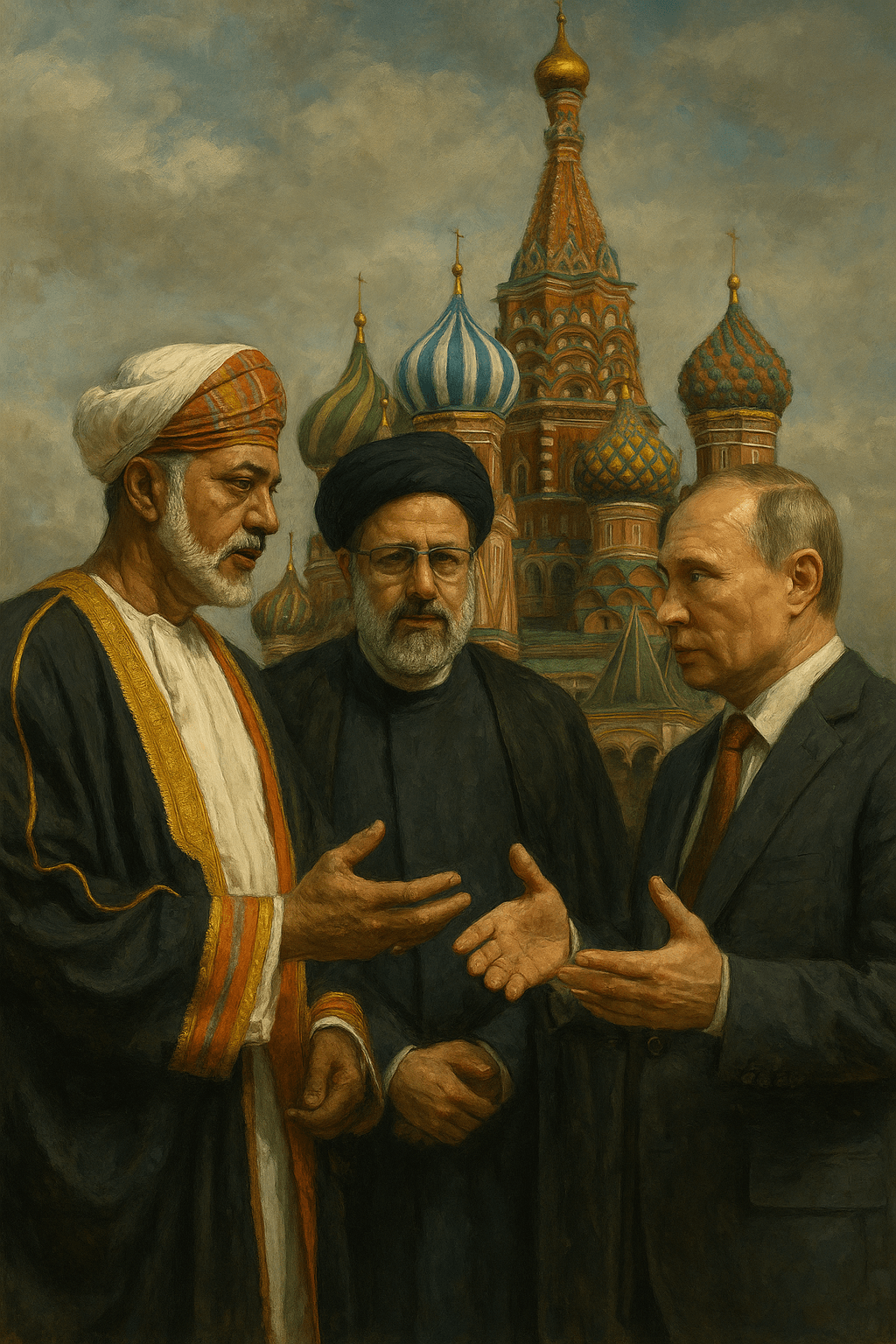
Recent reports show Oman hosting high-level talks with Iran and Russia—two nations under relentless Western siege. This isn’t just another diplomatic footnote. This is a subtle middle finger to U.S. hegemony and a glimpse of what a sovereign foreign policy can look like in the Arab world.
Balance in the Age of Bulldozers
While Saudi Arabia cuts deals with Washington and signs off on normalization with Zionist apartheid, Oman is playing the long game. It has no time for spectacle or subservience. It talks to everyone—Tehran, Moscow, Washington—but bows to none. This isn’t some naïve neutrality. It’s strategy born out of centuries of navigating empire from the margins.
This Ain’t Just Optics
These recent Russia-Iran-Oman talks are more than ceremonial. They come as the U.S. escalates its economic strangulation of Iran and fans war flames across West Asia. As the West talks “rules-based order” with one hand and sells bombs to genocidal regimes with the other, Oman quietly builds bridges. That’s power. Not loud, but lasting.
Chokepoints and Checkmates
Oman sits next to one of the most important arteries of global capitalism: the Strait of Hormuz. A fifth of the world’s oil passes through it. Control that waterway and you influence the flow of global power. Oman knows this. And rather than militarize it, they mediate around it. That’s why imperialism keeps one nervous eye on Muscat.
Multipolar Moves
Oman isn’t betting on Washington’s empire. It’s deepening trade and energy talks with China. It refused to host bases for Western aggression against Yemen. It didn’t touch the Abraham Accords. And it’s already exploring frameworks with BRICS+. In other words, it’s sketching out a future that doesn’t revolve around Wall Street, Langley, or the Pentagon.
A Model for the Global South?
Oman’s style isn’t flashy. But it offers a blueprint: no need to scream anti-imperial slogans when your foreign policy already puts it into practice. This is what decolonial diplomacy looks like: rooted, patient, sovereign. It won’t make CNN, but it will make history.
Conclusion: Still Waters, Deep Power
Oman doesn’t project power through threats. It does it through trust. While others chase imperial favor like it’s still 2003, Oman is already walking into the post-American world—quiet, firm, and unbought. In a region trapped between oil pipelines and U.S. bases, Oman is carving out a different future. Not by shouting—but by showing. And the world would do well to pay attention.
 Weaponized Information
Leave a comment