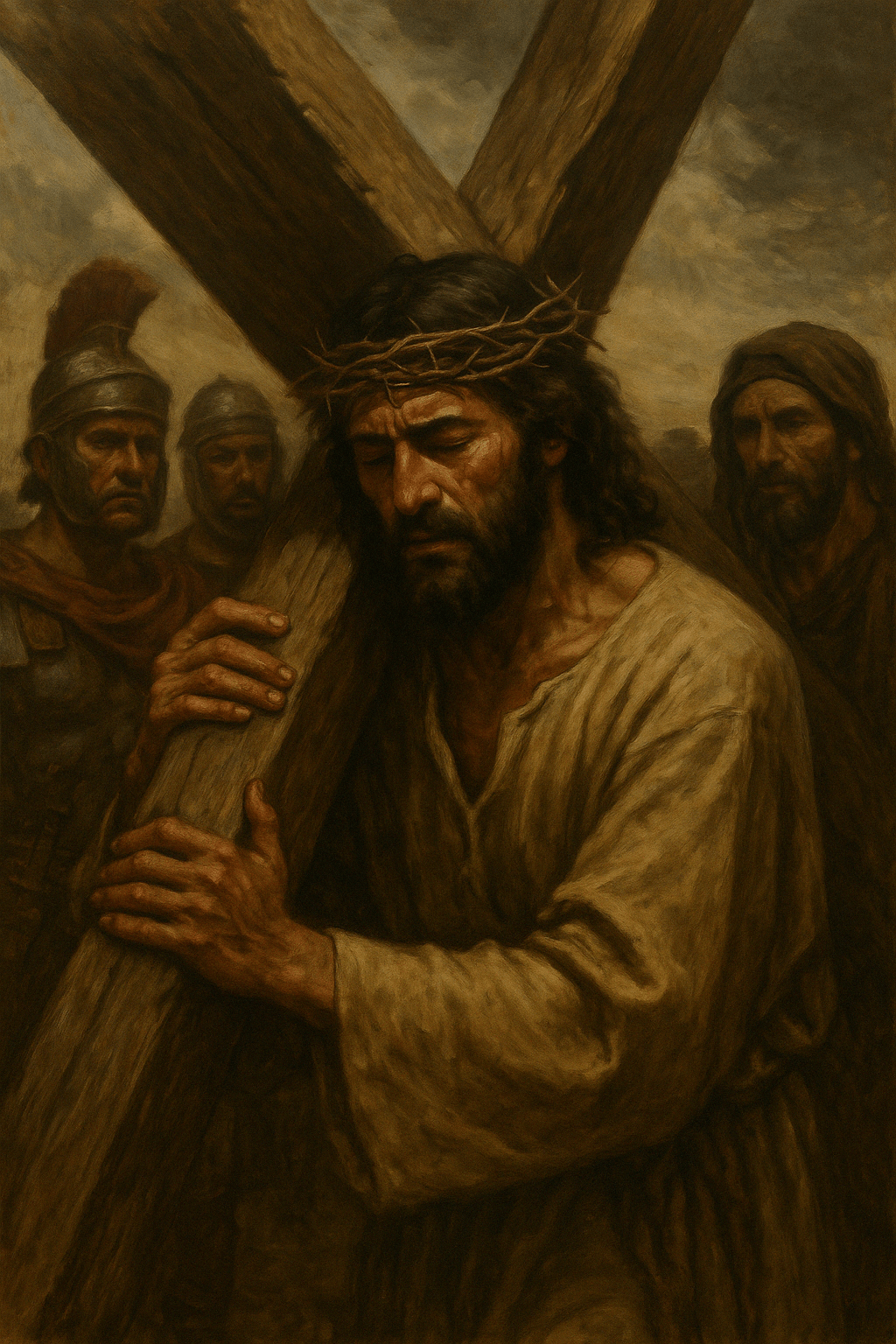
“Blessed are the poor, for theirs is the kingdom of heaven… but woe to you who are rich, for you have received your consolation.”
— Yeshua ben Yosef (Luke 6:20, 24)
The Radical from Nazareth
Yeshua ben Yosef—known to most as Jesus—was not the blond-haired pacifist of Renaissance paintings or the domesticated prophet of American suburbia. He was a brown-skinned revolutionary from an occupied land. A carpenter from Galilee who led a movement of the poor, the sick, the outcast, and the colonized against the Roman Empire and its local collaborators.
He didn’t come to start a new religion. He came to bring liberation—material, social, and spiritual—for the oppressed masses of Palestine. He confronted the Roman occupation not with legions, but with the mobilization of the wretched. He cast out demons and overturned the moneylenders’ tables. He called out hypocrisy in the synagogues and corruption in the courts. And for that, he was executed—not for blasphemy, but for sedition.
Yeshua was not crucified for preaching kindness. He was crucified because he threatened power.
Part I: Born Under Occupation
Yeshua was born in the province of Judea, a colony of the Roman Empire. His people were under military occupation, subject to Roman taxation, conscription, and repression. The Roman governors ruled through fear and spectacle—flogging rebels in the streets, crucifying dissidents, and plundering the land.
But the oppression wasn’t carried out by Romans alone. The empire relied on a local comprador class: Herodian rulers, Sadducees, and Pharisees who managed the native population in exchange for wealth and favor.
Yeshua grew up watching this parasitic arrangement. He saw how the poor were taxed into starvation, how the sick were shunned, and how the temple had become a marketplace of extraction and exclusion. From the start, he understood that Rome wasn’t the only enemy—the colonized elite who collaborated with Rome were just as guilty.
Part II: Ministry of the Oppressed
Yeshua’s ministry wasn’t staged in palaces or temples—it was rooted among the peasants, lepers, sex workers, beggars, and laborers. His message was clear: the last shall be first, and the first shall be last. The kingdom of God was not a future paradise—it was a revolutionary overturning of the existing order.
He fed the hungry without charge. He healed the sick without permit. He denounced the rich without apology. He told parables that exposed injustice and rallied the poor. He walked alongside women, touched the untouchable, and taught that God did not dwell in imperial temples but in the struggle of the people.
He confronted the Pharisees—the religious lawyers who enforced the colonial legal code—and called them vipers, whitewashed tombs, and enemies of justice. He rejected ritual for righteousness, and orthodoxy for truth.
Yeshua’s “miracles” weren’t magic tricks—they were acts of direct action. Releasing people from social death. Disrupting the colonial order. Showing that another world was possible.
Part III: Crucified by Empire
The Roman state doesn’t crucify spiritualists. It crucifies revolutionaries.
Yeshua’s popularity among the masses, his denunciation of wealth, his cleansing of the temple, and his proclamation of a coming kingdom made him a political threat. He was arrested not by pagans, but by temple authorities acting as colonial police.
He was interrogated, mocked, and tortured by Roman soldiers. He was offered release if he would recant—but he refused. He stood trial not as a priest or prophet, but as an insurrectionist. The charge: king of the Jews—a direct challenge to Caesar.
He was executed in the most humiliating way possible, alongside other political prisoners. Crucifixion was not just a punishment. It was a message. A tool of empire. A warning to anyone who dared to challenge Roman order.
But the cross did not silence him. It amplified him.
The Gospel According to the Oppressed
Yeshua ben Yosef did not die to save empire—he died fighting it. His life was not a parable about personal salvation—it was a political call to arms for the oppressed. His resurrection was not a magic trick—it was the refusal of the people to let the struggle die with the leader.
The early followers of Yeshua didn’t form churches—they formed communes. They shared all things in common. They rejected hierarchy. They lived out the principle that liberation must be collective or it is not liberation at all.
The Roman Empire tried to bury him. Later empires tried to co-opt him. But the revolutionary message remains: the poor will inherit the earth, and the empires of this world will fall.
Yeshua ben Yosef was not a passive lamb. He was a lion from the margins. A revolutionary who preached freedom and died a rebel. And in every act of liberation, in every cry for justice, he still walks with the oppressed.
 Weaponized Information
Leave a comment