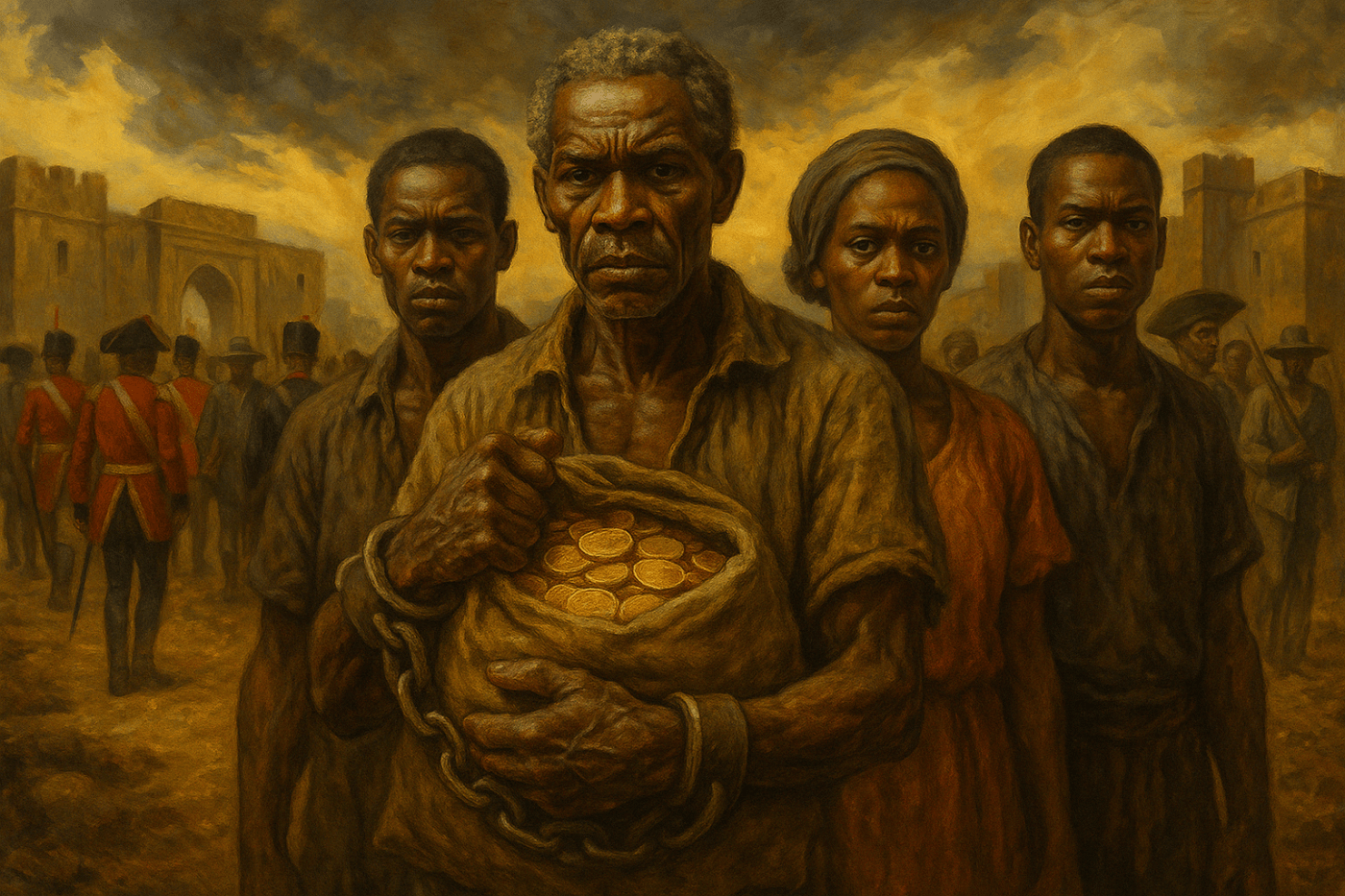
At the United Nations this week, Africa and her scattered children didn’t come to ask for favors. They came with a bill. And this time, the Global South isn’t leaving without payment.
I. A Forum Four Centuries Late
New York City—center of global finance, media, and empire—was forced this week to host something it rarely welcomes: truth. At the fourth UN Permanent Forum on People of African Descent, speakers from the African Union, CARICOM, and civil society didn’t speak the polite language of diplomacy. They spoke the sharp language of history. This wasn’t a conversation about recognition—it was about reparations. It was about justice.
Hilary Brown, speaking for CARICOM, laid it bare: “Africa was under siege.” Enslaved. Plundered. Uprooted. For 300 years, Europe turned Africa into a factory of death and profit. And the profits never stopped flowing north.
II. The West Was Built on the Bones of the Colonized
Let’s call it what it is. The modern wealth of the West—its banks, its railroads, its elite universities—wasn’t “earned” through innovation. It was stolen. Through the whip, the gunboat, and the ledger.
Estimates vary, but the math all points in the same direction:
- $75 trillion USD owed in reparations for slavery alone (Carleton University).
- $777 trillion USD owed to Africa, according to the African World Reparations and Repatriation Truth Commission.
- $45 trillion USD extracted from India and Africa by Britain during the colonial era (The Guardian).
This wasn’t a tragedy. It was a system. And that system still shapes the global order today.
III. The People Carried the Struggle
Governments may be arriving late to the conversation, but the people have been here the whole time. From Marcus Garvey to Queen Mother Moore to the radical organizers today building grassroots reparations campaigns—the fire never went out.
Nkechi Taifa, speaking for the Reparation Education Project, said it plainly: this movement didn’t start in boardrooms or parliaments. It started in the streets, in exile, in resistance. The children of the colonized have never stopped fighting for justice.
And it’s not just about the past. It’s about the present. The underdevelopment, the debt, the land theft, the forced migration—these are not echoes. They are ongoing crimes.
IV. This System Will Not Reform Itself
Let’s be honest: the colonial powers will not give back what they stole willingly. They are still stalling. Still hiding behind institutions and legal frameworks they themselves created.
But the demands are getting clearer:
- Financial compensation
- Land restitution
- Debt cancellation
- Institutional accountability
- Structural transformation
Reparations is not about guilt. It’s about justice. It’s about taking responsibility—not for history’s sake—but for the material realities that history produced.
V. A Reckoning Long in the Making
The time of polite appeals is ending. The time of revolutionary accounting is here. The Global South is organizing across borders and across generations. It is building new formations to make sure the debt gets paid—with or without permission.
As someone who lives in the belly of the beast, I believe it is our responsibility to side with the colonized—not in word, but in action. To support their demands. To dismantle the systems we benefit from. To return what was stolen.
Because this world was not built on peace. It was built on plunder. And the people who were looted haven’t forgotten.
Reparations is not a question of if. It’s a question of how—and how soon.
 Weaponized Information
Leave a comment