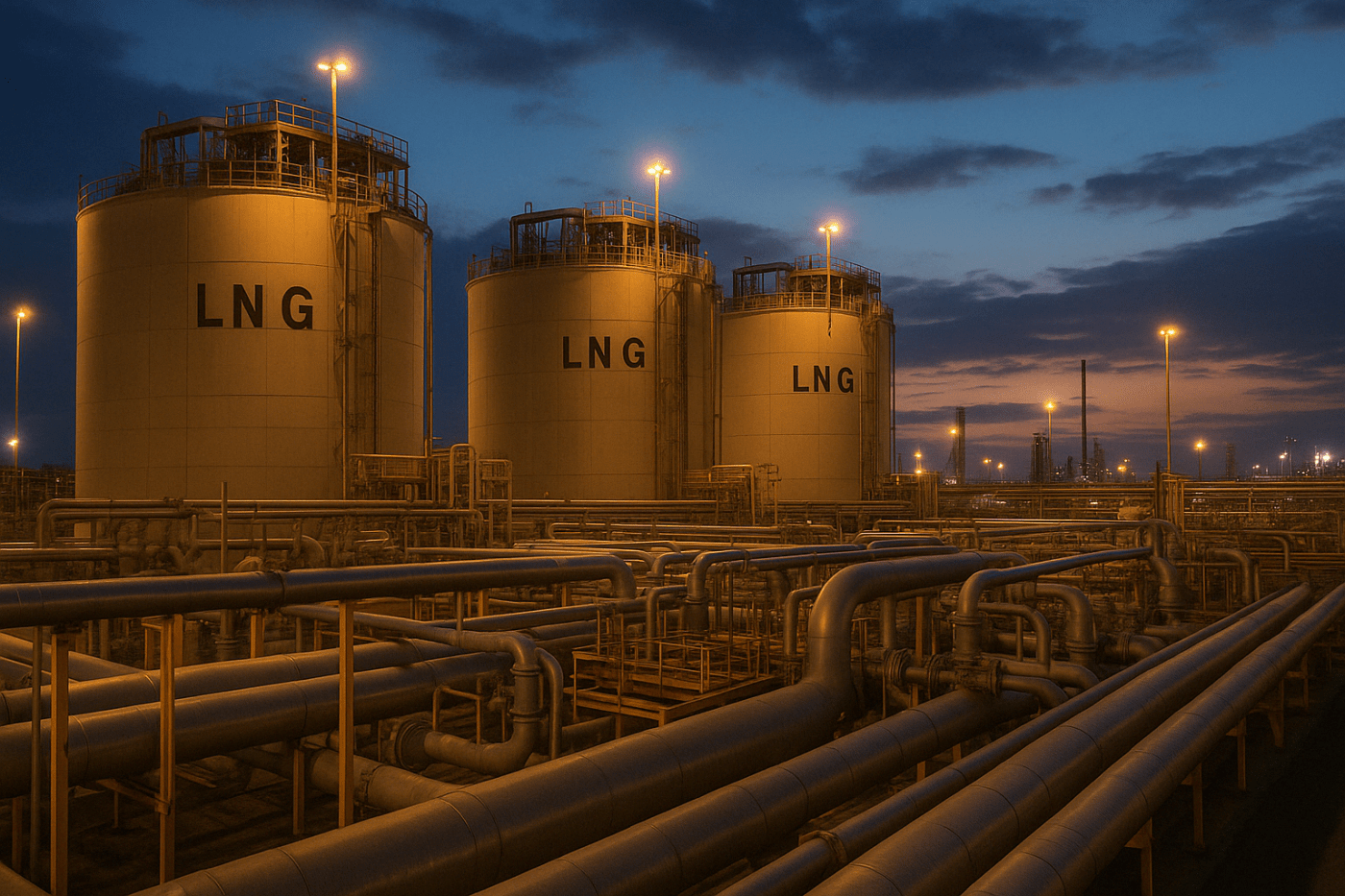
As Thailand deepens its LNG imports from the United States, the real cost isn’t measured in dollars or barrels—but in sovereignty. This isn’t energy security. It’s energy dependency, wrapped in a stars-and-stripes contract and tied with a noose.
I. The Tribute Beneath the Trade
Thailand didn’t walk into this deal. It was shoved.
Facing down Trump’s 36% tariff on Thai exports, the Thai government bent under pressure. The finance minister now promises a ramp-up of U.S. LNG and ethane imports over the next five years. The logic? Buy peace with Washington by buying its gas. A classic imperial play: destabilize a nation’s economy, then sell the cure.
But this isn’t a cure. It’s a leash. Thailand’s being fastened to the empire’s energy infrastructure, not for national security, but for strategic submission.
II. Fossil Capital, Technofascist Empire
In the age of climate breakdown and multipolar possibility, the U.S. is still peddling fossil fuels like it’s 1975. And countries like Thailand, locked into unequal trade relationships, are left with two choices: resist or comply.
This LNG deal is pitched as a solution to Thailand’s growth slowdown. But it’s really a transfer of risk: the Thai economy gets volatility and dependency; U.S. corporations get guaranteed profits. It’s neoliberalism’s greatest con rebranded in technofascist form—a world where Washington imposes economic pain, then offers gas and guns as relief.
III. Regional Sovereignty or Imperial Pipeline?
Thailand has regional options. Energy cooperation with neighbors. BRI-backed infrastructure. Multilateral energy independence. But those options threaten the American monopoly. That’s why Washington is pushing this deal hard—because the U.S. doesn’t just want trade. It wants alignment. Subordination. A compliant Southeast Asia linked to empire through ports, pipelines, and petro-contracts.
This is not diplomacy. It’s fossil-fed geopolitics. A slick form of economic warfare dressed up as “cooperation.”
IV. The Choice Before Thailand
There’s nothing wrong with buying gas. But there’s everything wrong with buying it at the barrel of a tariff gun.
Thailand’s future doesn’t lie in doubling down on dependency. It lies in breaking free from the chokehold of hyper-imperialism and building an energy system rooted in regional solidarity and sovereign control. The BRI, ASEAN cooperation, and Global South partnerships offer real paths out.
This isn’t just about gas. It’s about how empires reproduce themselves—not just through soldiers, but through spreadsheets.
The Empire Doesn’t Sell Gas. It Sells Chains.
Thailand is being handed a pen, not to sign a trade agreement, but to seal a strategic surrender. The LNG deal may fill some ports, but it drains sovereignty. It ties Thailand’s economic future to a dying empire that survives by squeezing its allies harder than its enemies.
This is what technofascism looks like abroad: fossil capitalism dressed in diplomatic clothes, backed by tariffs, driven by monopoly logic, and enforced through economic siege.
If Southeast Asia wants a future, it won’t find it at the end of a U.S. pipeline.
It will find it by cutting the cord.
 Weaponized Information
Leave a comment